






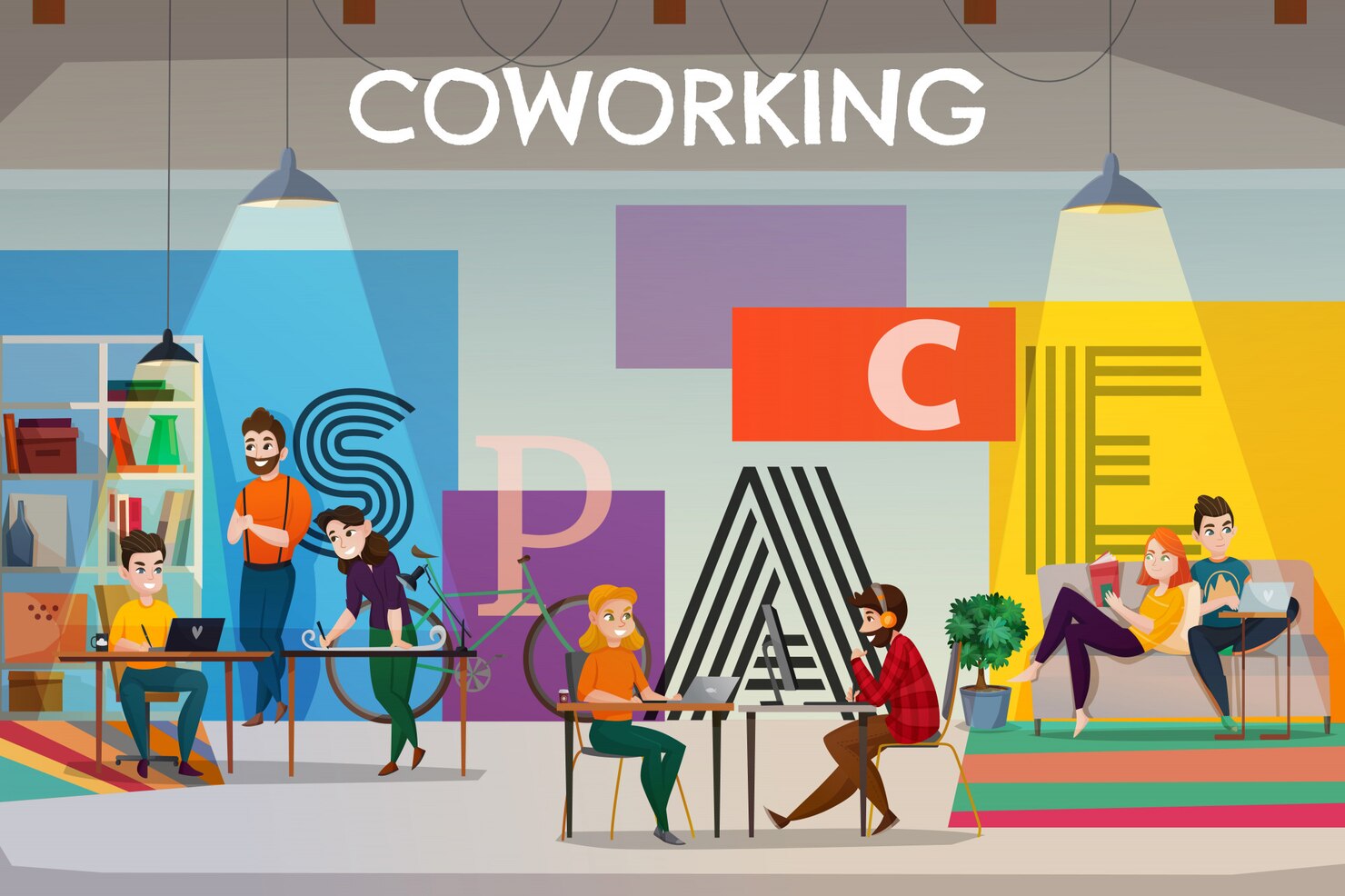
In the last decade, co-working has become a convenient option for people who work independently or even remotely. The users can include freelancers, startups, and even small businesses. However, how a co-working office system works is still a mystery to a large number of people. Through the course of this blog, we shall explore the core framework on which a co-working system operates and how it can be of use to companies, both big and small.
WHAT IS A CO-WORKING OFFICE SYSTEM?
A co-working office system is essentially an office space where people from different organizations share a mutual space, along with other facilities and resources. Typically, the space is divided into sections like a common workspace, workstations, conference rooms, and various other configurations. Of course, the companies using the space have to pay a fee, usually every month. Along with the various spaces, there are also additional auxiliary facilities, such as an internet connection, which is rapidly becoming a mandate, printing services, coffee/tea supply, etc.
HOW DOES A CO-WORKING OFFICE SYSTEM WORK?
As mentioned above, the people using the space pay a fee typically monthly or have a contract period of a year. The entity in charge of the space manages it and supplies the members of the office with good internet, conference spaces, pantry facilities, and printing services. The members are allowed to use the workspace for anything they wish, be it for a meeting/conference, any event, or even to partner up with other members of the workspace. Some office systems which have workspaces in multiple locations provide even more flexibility wherein they provide plans which give members access to workspaces at all of their locations.
ADVANTAGES OF A CO-WORKING SYSTEM:
→ Reduces Expenditure: As you’re sharing a workspace with multiple others, the capital expenditure is less as compared to a completely private workspace. For example, if a freelancer wishes to obtain a room only for a 3-hour long meeting, he can pay for a space in a co-working system for only the required amount of time, as compared to a private workspace where he would have to pay for an entire day or even a month.
→Increased scope for collaboration: If one is working in a co-working space, there are individuals from many other organizations using the same workspace. As a result, it opens a door for conversation and collaboration with someone who may have a similar mindset and expansionary plan and share ideas. If both companies can mutually benefit each other, it can be a very direct link to a partnership.
→Versatility: A co-working space gives a person or a company a lot of freedom in various aspects such as timings, locations, etc. A member can choose the timespan he needs the space for, as there are plans like full-time, part-time, pay-as-you-go, etc. As previously mentioned, some systems allow members to work in workspaces at different locations thus making it convenient for people who need to work in different locations.
→Convenient Facilities: Co-working spaces provide members with various facilities along with the base fee. Hence, members can enjoy certain facilities like fast and stable internet connection, printing services, coffee machines, etc. at no extra cost.
→Professional Impression: Utilizing a co-working office system allows the users to make a professional impression on prospective clients during meetings. This is a good strategy for small businesses and startups as they can make a professional impression on a limited amount of capital.
DISADVANTAGES OF A CO-WORKING SYSTEM
Like everything else in the world, co-working systems also have their fair share of setbacks to accompany their strong points. These are as follows:
→Interferences and distractions: Co-working systems involve the sharing of office spaces by people of various organizations. So, there can be many noises and distractions which can pose as a barrier to having a good work environment. Hence, the members will need to find ways to avoid distractions and keep their focus on their work.
→Limited Privacy: Co-working office systems usually involve open-plan spaces. This means that there is little to no privacy. As a result, members who need a private space for a client meeting or a conference of any sort would be required to book meeting rooms which will in most cases come at an extra cost.
→Limited Control: The person in charge of the co-working space is the operator. Therefore, members have very less control over the space. They have to respect the guidelines and regulations laid down by the operator and this can pose a problem concerning working hours, noise level, etc.
To conclude, co-working office systems are imaginative solutions that provide flexibility to their users, whether they be individuals, small businesses, or large conglomerates. Members can get an amenity-filled workspace at nominal rates and hence enhance their business.