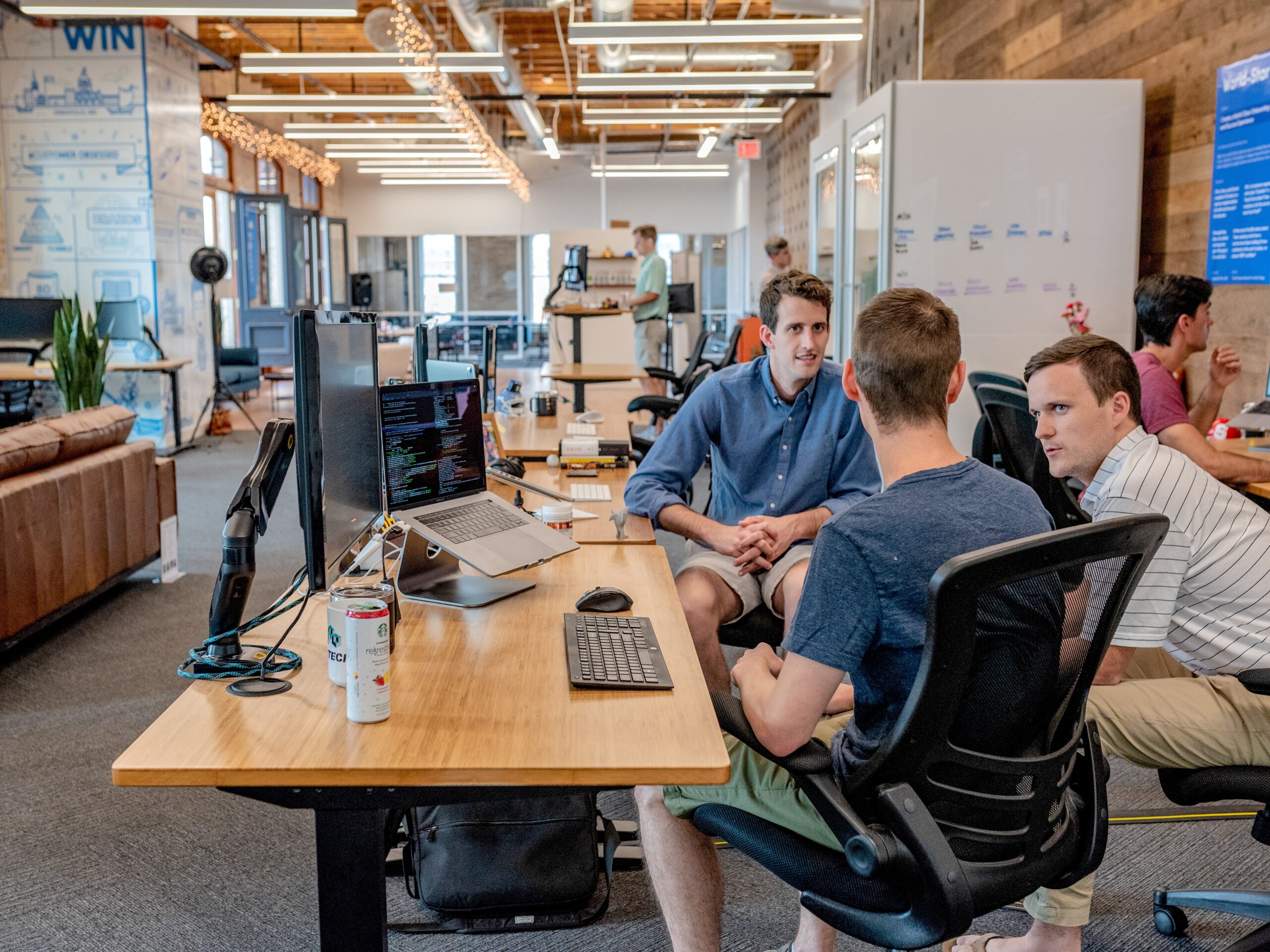







Efficient workplace space management is the key to planning a work-friendly environment. It holds prominence in organizational performance.
Space management involves creating your workplace in a more organized way. Workspace management has been evolving, and a lot of companies have shifted to more flexible work arrangements – called Hybrid work culture today, that requires employees to be present on-site only for certain days in a week.
WHAT IS SPACE MANAGEMENT?
It involves auditing, tracking, vendor management, sales management, safety management, and management of the company’s physical space. This can range from designing hybrid workspaces to accommodate various work styles to making sure spaces like cafeterias and break room spaces are secure, well-equipped, and generally accessible to utilize. Organizations are investing heavily in strategic workplace space management to boost employee productivity and stronger support for flexible business operations.
The driving forces behind efficient workspace management are threefold;
Employee productivity, occupant well-being, and workplace safety.
IMPORTANCE OF WORKPLACE SPACE MANAGEMENT
Achieved by making an effort to minimize wasted space, delegating areas appropriately for different types of work, regulating the requirements of the contemporary or present-day workforce, and enhancing employee wellbeing.
Utilizing work resources effectively and making the best use of available space can help businesses ensure that workers have the appropriate areas and resources at their disposal, and can also help to increase workplace safety and employee efficiency.
BENEFITS OF WORKPLACE SPACE MANAGEMENT
The outcome depends on the planning and management of the physical workspace to the best of its ability. Good use of the available space promotes a productive working-friendly environment, greater collaborations, and overall happy and productive employees.
Let’s look at a few additional advantages of why a company should prioritize good workplace space management.
- Cost Management –
Most big organizations and companies require a large office space to run their essential business functions such as research, administration, customer services, etc. Similarly, renting out empty office space costs a lot of money for businesses all over the world, especially as more and more workers today choose to work remotely. Costs related to unused or inefficiently used space can be decreased by switching to a more flexible workspace that can scale up and down to suit changing team sizes.
- Employee Engagement –
A strategic workplace management system helps create a positive and productive work environment. Improving the facilities at work have a significant effect on how the employee performs at work. Workplace space management isn’t hard. You only have to use the right tools to ensure your workspace serves the needs of the employees with better utilization of the space.
- Employee Experience
Employee experience and workplace space management go hand in hand. Access to tools and resources inspires and motivates employees to perform better. Willis Towers Watson, an insurance company researched employee experience in June 2021, stating that, “More than 9 out of 10 employers make enhancing the employee experience a top priority for organization success.”
- Adaptability
Regulations and policies in the workplace are changing constantly.
Adaptable workplaces are essential for businesses likely to face uncertainty due to market shifts like hiring and downsizing. An adaptable workplace performs economically with minimum expenses and performs responsibly with minimum resources.
- Better Productivity
A cluttered desk is a cluttered mind. The office is the same way. Employees can come to work and be more productive in a well-organized environment that is free of unnecessary clutter and unused spaces. Workplace space planning depends on several factors like knowing what environment your employees work in the best. One leading example for employee productivity is Apple, a tech giant, whose 2.8 million square feet workplace structure accommodates 12,000 employees. Apple intended for its workplace site architectural design to work with nature, which has proven to promote employee productivity, improve mental health, and reduce work stress.
Every organization, whether it be a government agency, university, factory, chain of stores, or financial institution, requires a specific kind of space to support its primary operations. We would comment that space management reflects the company culture. Additionally, spaces can be assigned, such as a workspace designated for a particular employee, or shared, such as a meeting room. Therefore, one thing is always certain: Every organization needs a system or process to manage its space efficiently.